My Story: From Survive to Thrive
I did not grow up with the language to name my experiences. I only knew what it felt like to move between worlds—home and school, culture and expectation—without a bridge between them. There were moments when I felt invisible, and others when I felt misunderstood. Looking back now, I understand that what I was navigating was more than identity; it was the intersectionality of language, culture, societal pressures, and systems that were never designed with students like me in mind (Weiss, 2023). What I have come to believe, both through lived experience and through my work in education, is that children do not simply learn in schools—they survive or they thrive, depending on how well those systems recognize and respond to who they are.
In the United States, multilingualism is too often treated as an exception rather than the global norm. English dominates not only instruction, but legitimacy (Cox et al., 2025). Students who speak other languages—or who speak English differently—are frequently positioned as needing remediation rather than recognition. Research has long documented the discrimination tied to accented English and the broader consequences of English-only ideologies, which create subtractive schooling experiences for multilingual learners. I have seen this firsthand in classrooms and communities, where potential is overlooked simply because it is expressed in a language or form that schools have not been prepared to respect. Students are sometimes pulled from multilingual education to focus on English-only, which does more damage than good in most cases (Bibler, 2022; Reifler, 2021). These systems do not fail students by accident; they fail them by design.
My experiences prepared me for bilingual education as a career. I came into the multilingual learner space having an ingrained knowledge of what language oppressions was. My grandparents had lost our tribal language. They all spoke French as a first tongue, and they’d all suffered in social life because of that (Urbain, 2016). Multilingual learners are not empty vessels waiting to be filled; they are already full of language, of culture, of ways of knowing. Approaches like translanguaging and multimodal learning recognize that students make meaning across languages and modes, not within the narrow confines of a single standardized form (Harris et al., 2022). The way educators think about students shapes how they teach them, and ultimately, how students see themselves. When we move from deficit-based thinking to asset-based frameworks, we do more than change instruction—we change trajectorie (Welborn & Lindsey, 2020).
If we are serious about equity, then we must design schools where multilingual and multicultural students can thrive—not by asking them to conform, but by building systems that reflect them. This means creating inclusive, multimodal classrooms where multiple ways of knowing are not just accepted but expected. It means embedding cultural competence and anti-racist practices into the fabric of teaching, not treating them as add-ons (Tran & Selcen Guzey, 2023). It means recognizing that language is not a barrier to overcome, but a resource to cultivate. Models that prioritize collaboration, individualized learning, and respect for cultural and linguistic diversity remind us that this kind of education is not only possible—it is already happening in spaces where students are seen fully (Câmara, 2024).
My story did not begin in a system designed for me, but it has shaped how I work to rework systems or even subvert them for the benefit of others. I carry with me the understanding that identity, language, and education are inseparable, and that the responsibility of education is neither to categorize nor standardize students, but to expand what is possible for them. Multilingual and multicultural students are not “at risk.” They are navigating systems that have yet to catch up to their strengths (Lin, 2020). The question is not whether they can thrive. The question is whether we are willing to build schools that allow them to.
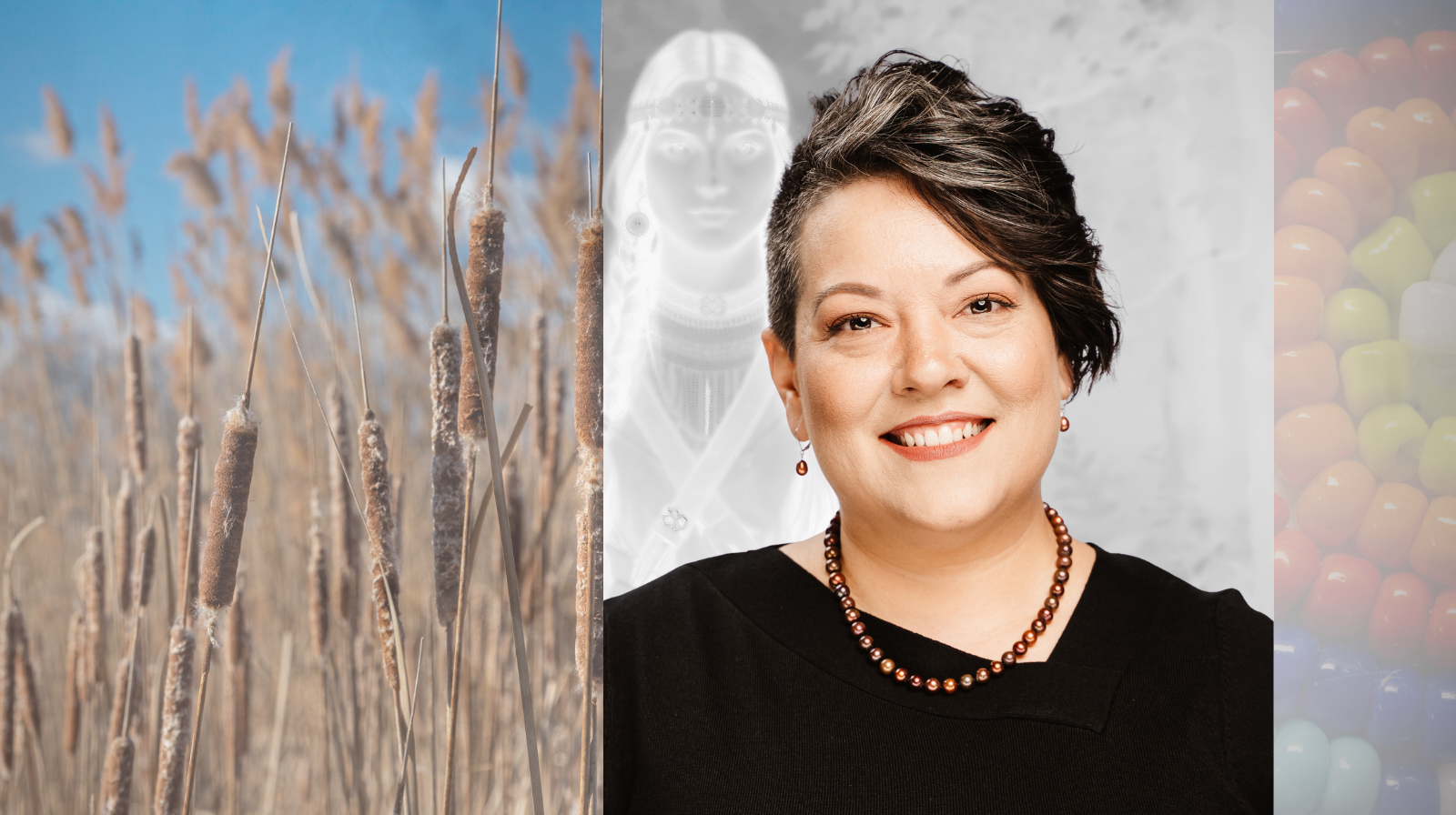
I grew up in the marshes, trekking through cat tails, and foraging thistles for a snack. I heard French more than English in family homes, but I never could grasp onto the parts of traditional and culture that are like mist all around me.
References
Bibler, A. J. (2022). Language Immersion and Student Achievement. Education Economics, 30(5), 451–464. https://doi.org/10.1080/09645292.2021.2001788
Câmara, J. N. (2024). Funds of knowledge: Towards an asset‐based approach to refugee education and family engagement in England. British Educational Research Journal, 50(2), 876–904. https://doi.org/10.1002/berj.3946
Cox Jr., R. B., Arredondo-Lopez, A., León-Cartagena, M., Dorda, C., & deSouza, D. K. (2025). Families Navigating Two Languages in a Country Built for One: Shared Language Erosion Among Hispanic Parents and Youth. Journal of Social & Personal Relationships, 42(8), 1849–1879. https://doi.org/10.1177/02654075251332034
Harris, P., Camaitoga, U., Brock, C. H., Diamond, A., McInnes, E., & Neill, B. (2022). Co‐Creating Multilingual Books with Children to Foster Their Literacies. Reading Teacher, 75(5), 555–565. https://doi.org/10.1002/trtr.2076
Lin, A. M. Y. (2020). From Deficit-Based Teaching to Asset-Based Teaching in Higher Education in BANA Countries: Cutting through “Either-Or” Binaries with a Heteroglossic Plurilingual Lens. Language, Culture and Curriculum, 33(2), 203–212. https://doi.org/10.1080/07908318.2020.1723927
Reifler, A. (2021). Classroom Pull-Out: Helping or Hurting Students’ Self-Concepts and Academic Success? [Documents]. Trinity Student Scholarship. Trinity College Digital Repository. https://jstor.org/stable/community.34031424
Tran, K. Q., & Selcen Guzey, S. (2023). Cultivating Culturally Sustaining Integrated Science, Technology, Engineering, and Mathematics Classrooms: A Narrative Inquiry Case Study of a Science Teacher. Science Education, 107(6), 1507–1530. https://doi.org/10.1002/sce.21813
Urbain, E. (2016). Towards a “Bilingual American Citizen”: Language Ideologies, Citizenship and Race in 19th Century French Louisiana. Language and Communication, 51, 17–29. https://doi.org/10.1016/j.langcom.2016.07.006
Weiss, D. S. (2023). Intersectionality, Agency and Take‐up of Benefits Among Families Living in Poverty. Social Policy & Administration, 57(7), 1072–1088. https://doi.org/10.1111/spol.12921
Welborn, J. E., & Lindsey, R. B. (2020). A Descriptive Study of the Case of Eaveston School District: Core Values from Deficit-Based to Asset-Based. Journal of Leadership, Equity, and Research, 6(1).